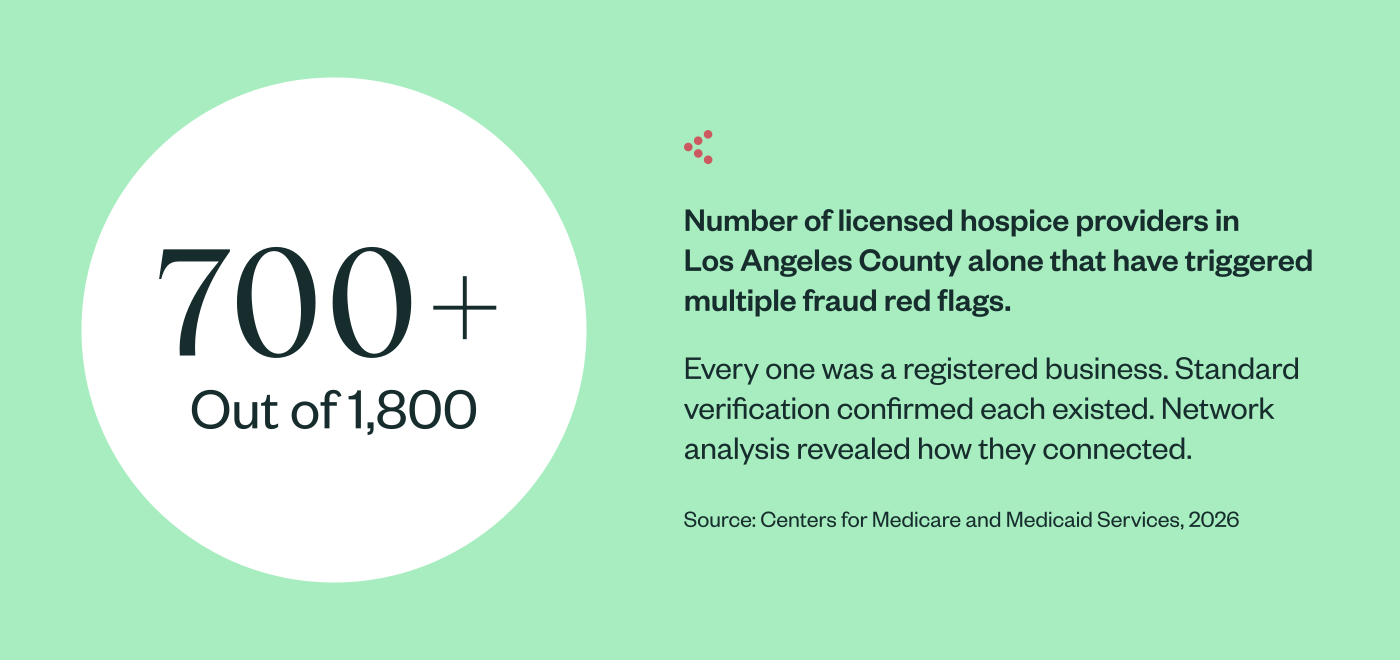
Business fraud no longer arrives as an isolated incident. It arrives as infrastructure — dozens of shell entities clustered at a single address, ownership networks linking hundreds of operators across postal codes, and registration spikes timed to regulatory blind spots. The California hospice crisis made that infrastructure visible: federal authorities identified 89 companies at one address, charged 15 people across nine interconnected investigations, and estimated $3.5 billion in Medicare fraud from Los Angeles County alone. Trulioo analysts replicated those same clusters using the Trulioo Business Registry — and what the data revealed is not a healthcare problem. It is a Know Your Business (KYB) failure, and it is operating at scale.
Why Business Fraud Now Operates as Networked Infrastructure
What entity network fraud is?
Entity network fraud is the coordinated use of multiple registered business entities — sharing addresses, directors, staff or billing infrastructure — to exploit verification systems that evaluate each entity in isolation. The fraud exists in the relationships between records, not in any single record.
Standard Know Your Business checks ask one question about each business: does it exist? Registration number, listed address, named director — all confirmed. The business passes.
But the hospice fraud rings operating across Southern California did not need any single entity to look suspicious. They needed each entity to look clean. Eighty-nine entities at one address, each with a different name and nominally different ownership, each passing a point-in-time registry check.
This is the structural shift risk teams are still adapting to. Fraud has industrialised. What once required a single bad actor now operates through organized networks — shared infrastructure, distributed ownership and coordinated registration patterns that exploit the gap between what business verification checks and what it misses.
The pattern is not limited to healthcare. Wherever there is a government program, a platform marketplace or a financial institution that onboards businesses at volume, the same playbook applies. The entity names change. The network structure does not.
How the Hospice Fraud Crisis Exposed Critical Know Your Business Gaps
What the hospice fraud pattern reveals about KYB limitations
The California hospice fraud cases show what happens when business verification confirms registration data but cannot see the network — the shared directors, clustered addresses and registration spikes that distinguish a fraud ring from a legitimate operator.
The enforcement facts are direct. Eight people arrested in a single $50 million scheme. Fifteen charged across nine interconnected investigations in Operation Never Say Die. A couple with prior tax evasion convictions operated a hospice under their daughter’s name. One licensed physician linked to 63 separate hospice facilities, billing Medicare more than $35 million in a single year.
Each of these entities was a registered business. Each had a listed director. Each had an address. By every measure a standard Know Your Business check evaluates, they were legitimate.
The structural problem traces back to a pattern first publicly documented in California’s March 2022 state audit: since 2010, hospice providers in Los Angeles County grew by more than 1,500%, far outpacing national trends. Emergency licensing measures followed in late 2022. CMS escalated oversight in 2023. Federal prosecutions ran through 2025 and into 2026. Hundreds of entities continued to operate across that period because the verification gap was not at the individual entity level. It was at the network level.
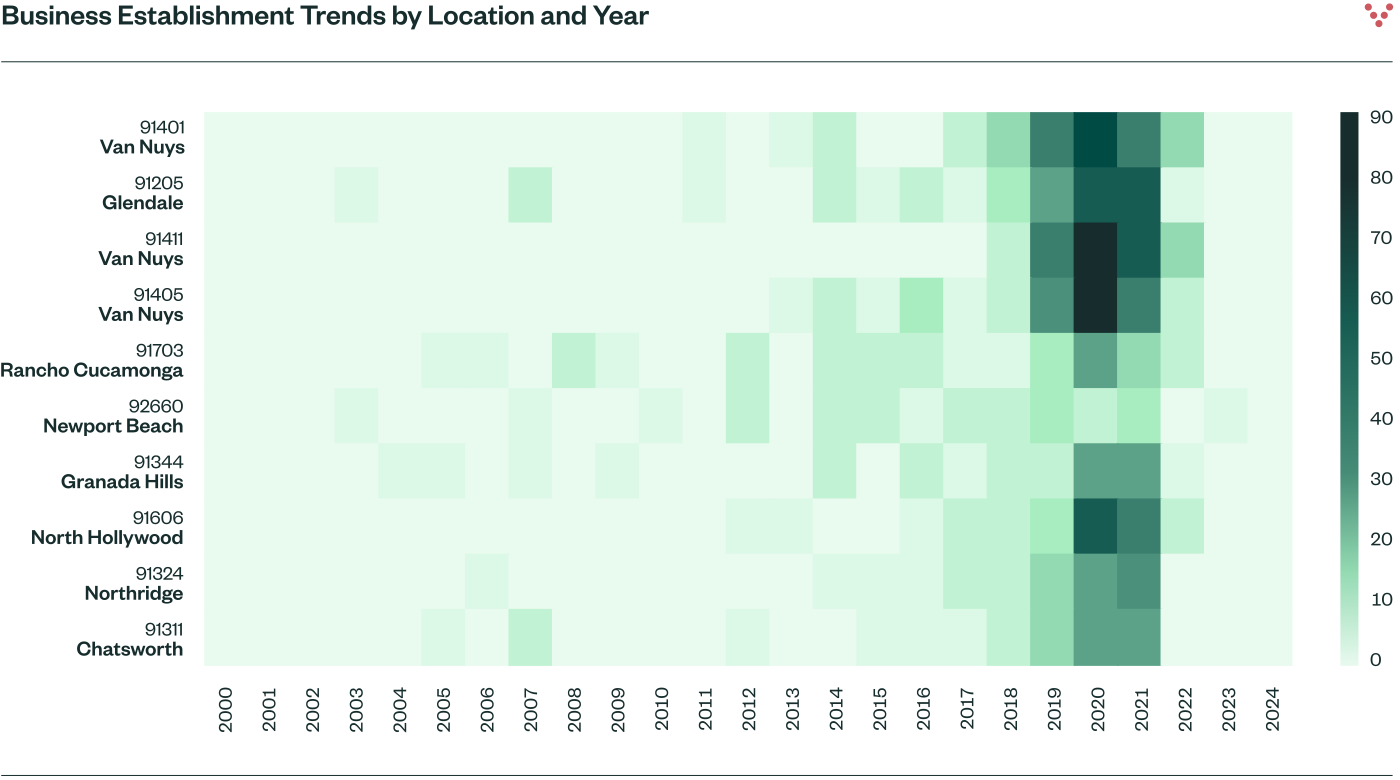
Trulioo analysts, working with the Trulioo Business Registry, reproduced the same clusters identified in public reporting. Across more than 1.7 million healthcare-related business records in Los Angeles County, the data showed the same registration velocity spike — concentrated in postal codes including Van Nuys (91411), North Hollywood (91606) and Glendale (91205) — that investigators had flagged through years of manual review. The data confirmed what enforcement already showed: this fraud was organised, replicable and visible to network-level analysis.

What Entity Network Detection Means — And Why It Differs from Standard Know Your Business
How entity network detection works
Entity network detection evaluates not just whether a business exists, but how it connects — to other entities, to shared directors, to registered addresses and to formation patterns — to surface fraud that only becomes visible at the network level.
Standard Know Your Business processes treat each business as a discrete record. They confirm registration, validate the listed beneficial owner, run sanctions checks and return a pass or fail. For a single legitimate business, that is sufficient.
For a fraud network, it is the wrong unit of analysis.
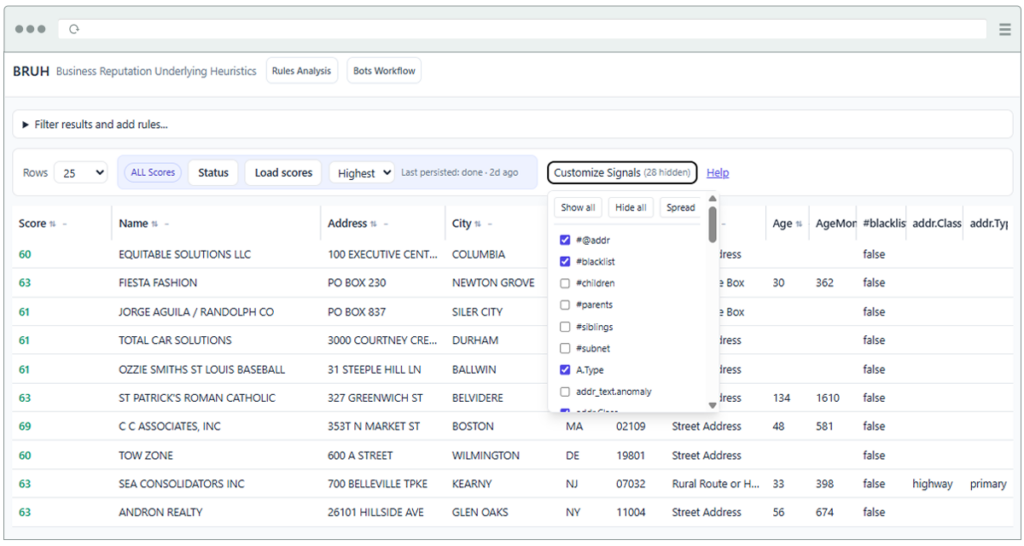
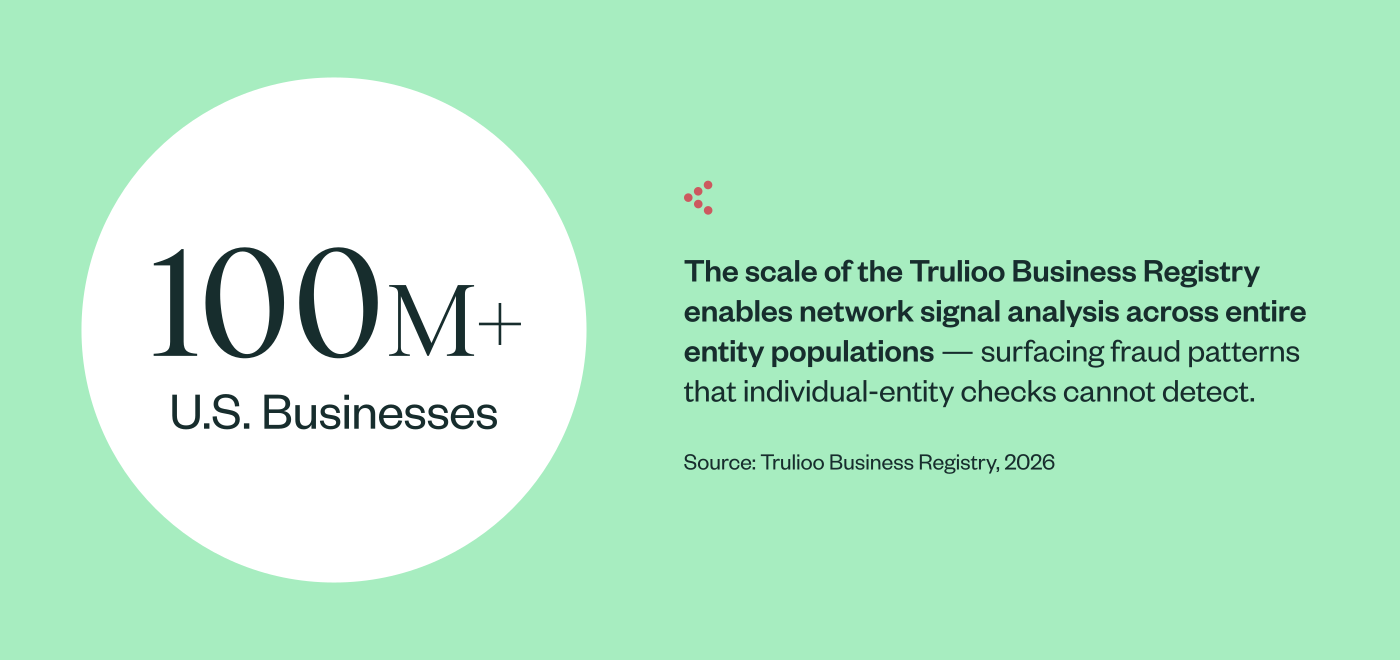
The Trulioo research team built a layered investigation using the Business Reputation Engine — an internal tool that applies multiple signals simultaneously to prioritise which businesses warrant deeper review, across more than 100 million U.S. business records in the Trulioo registry.
No single signal was sufficient. Industry classification alone proved too noisy — hospice-related businesses appeared across multiple NAICS codes and some carried no classification at all. Geographic filters narrowed the field but could not distinguish legitimate healthcare clusters from fraudulent ones. What worked was layering signals: registration date velocity (spikes in entity formation within a postal code and year), director connectivity (a single director linked to more than one hospice entity), address density (multiple entities registered to the same street block) and network centrality (postal codes acting as hubs in the broader entity graph).
The resulting network visualisation mapped hospice entities through shared director relationships against the Van Nuys postal code as a connectivity hub. Zoomed subnetwork views revealed cases where three directors shared ownership across two hospices with near-identical names — a pattern invisible in any individual entity check.
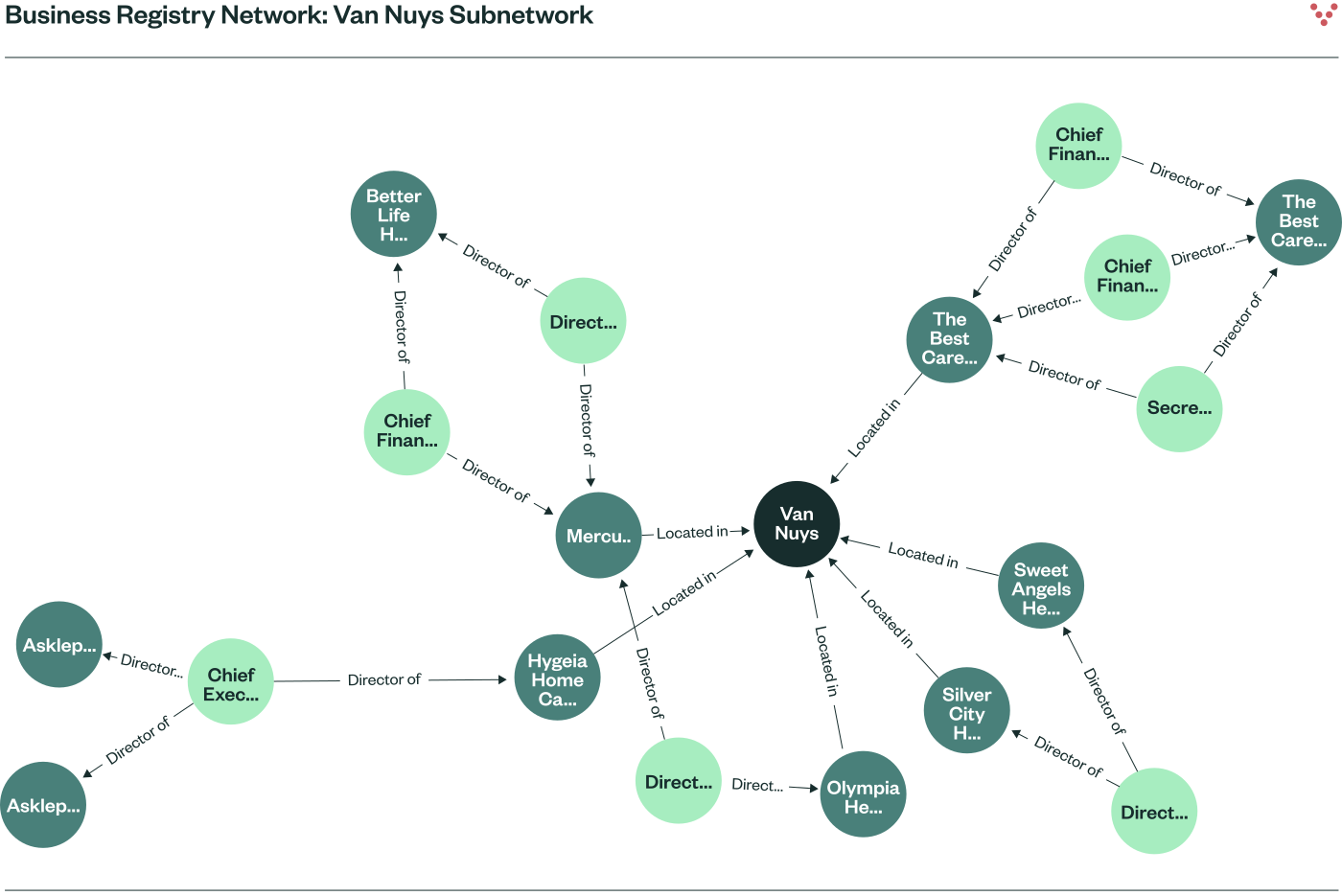
This is what entity network detection means in practice: not a better lookup on a single company, but a different question asked at a different level.
When a Business Passes Verification but the Network Fails: The Hidden Risk
What the network blind spot looks like for risk teams
A business passes standard Know Your Business verification when its registration, director and address data check out individually — but that check cannot detect a fraud ring operating through multiple entities with shared infrastructure, because verification was designed to evaluate one company at a time.
The hospice fraud operators understood this. They did not create obviously suspicious entities. They created dozens of entities designed to look clean in isolation. The fraud was not in any one record. It was in the relationships between records.
The Trulioo investigation produced three findings that apply directly beyond the hospice vertical.
First: known fraud patterns are reproducible. When Trulioo ran formation data, reputation signals and ownership graphs against the Los Angeles clusters, the fraud patterns matched what federal investigators had identified through years of manual review. The Trulioo Business Registry, with the right signals layered across it, arrived at the same answer in a fraction of the time.
Second: emerging patterns remain difficult to catch. The methodology above works when there is a known cluster to start from. Early-stage fraud — before entity formation spikes are statistically distinct, before director networks are dense enough to flag — is hard to separate from legitimate activity. No static rule set and no single signal solves this. Detection at this stage requires continuous monitoring and iterative signal refinement as patterns develop.
Third: the investigation can expand. Starting from Los Angeles, the same methodology applies to broader California, Nevada, Texas and Arizona — regions already flagged by CMS as high-risk for hospice fraud. Fraud networks do not respect geographic boundaries and neither should network-based business verification.
The risk implication is direct. A Know Your Business strategy that evaluates entities individually has a structural blind spot. It confirms that each tree looks healthy while missing the forest entirely.

How to Build a Business Verification Strategy That Sees Entity Networks
What a network-aware business verification approach requires
A network-aware business verification strategy combines entity-level checks with ongoing network analysis — layering director connectivity, address density, formation velocity and reputation signals — to surface fraud that no single check can detect.
The hospice case study is not an argument against Know Your Business verification. It is an argument for raising the standard. Three requirements define what that standard looks like.
Layered signals, not single checks. No one signal identifies networked fraud. The Trulioo investigation layered industry classification, geographic concentration, registration velocity, director relationships and network centrality. Each alone was insufficient. Combined, they reproduced patterns that had taken federal investigators years to document manually.
Network visibility, not just entity records. Beneficial ownership verification at the individual entity level is necessary but not sufficient. The question is not only who owns this business — it is whether that person also owns ten others clustered in the same postal code, registered in the same six-month window, sharing staff and billing infrastructure. That question requires a graph, not a lookup. Trulioo’s Business Complete solution maps corporate structures and beneficial ownership precisely for this purpose.
Continuous monitoring, not point-in-time onboarding. The hospice fraud rings operating in Los Angeles ran for years after entities passed initial registration checks. Ownership shifted. New entities formed. Directors spread across additional clusters. A verification that happens once at onboarding will miss every post-onboarding change that turns a previously clean entity into a network risk. Regulatory compliance increasingly demands ongoing due diligence — not a one-time check.
The Trulioo business verification solution combines business registry data, UBO graph analysis and ongoing reputation signals — built for the way fraud actually operates: as a network, at scale, over time.
See how Trulioo maps entity networks: explore business verification.
For a broader view of Know Your Business compliance requirements and how they are evolving, read the Trulioo KYB resource centre.
Business fraud is a network problem. Verification that looks at one entity at a time will miss it.
Explore the Trulioo Platform Today
Book a DemoSolutions
Know Your Business (KYB) Verification
Business Verification for the Globe

Featured Blog Posts
Individual Verification (KYC)
KYC: 3 Steps to Achieving Know Your Customer ComplianceBusiness Verification (KYB)
What is Enhanced Due Diligence (EDD)? Definition, Process & Requirements.Identity Verification
Proof of Address — Quickly and Accurately Verify AddressesIndividual Verification (KYC)
Top 10 Questions About Beneficial Ownership for AML/KYC ComplianceBusiness Verification (KYB)
How to Verify Legitimate Businesses and MerchantsIndividual Verification (KYC)
Customer Due Diligence Checklist — Five Steps to Improve Your CDD